
Storage and handling best practices for research peptides
May 29, 2026
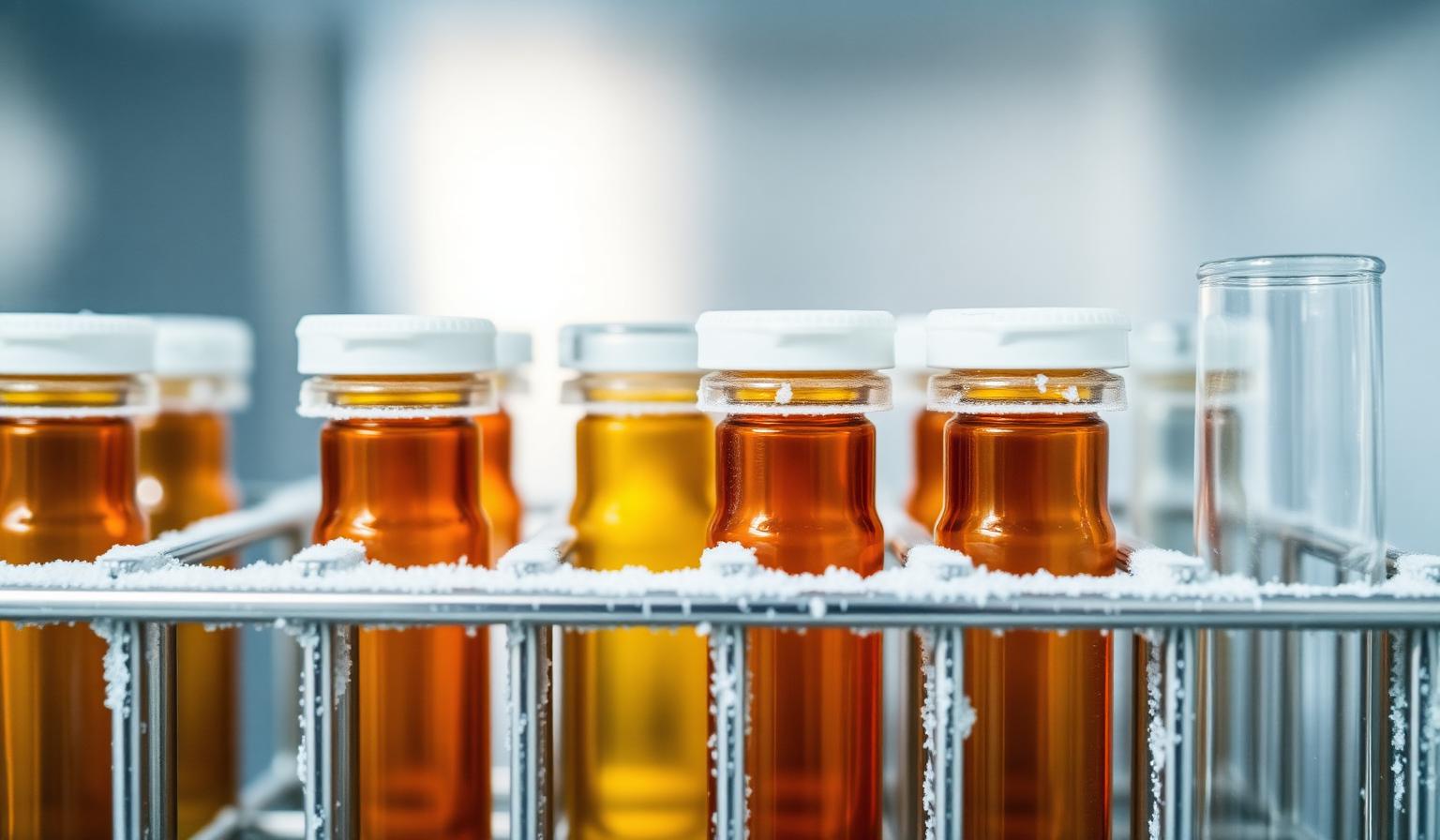
The integrity of experimental results depends heavily on the quality and stability of the reagents used. For researchers working with synthetic peptides, this principle is particularly critical. Peptides are complex molecules, often synthesized through intricate multi-step processes involving protective groups and coupling reagents to link individual amino acids in a precise sequence. Their chemical structure, featuring various functional side chains and peptide bonds, makes them susceptible to degradation from environmental factors like temperature, moisture, oxygen, and light. To ensure their viability from receipt to final use, adopting rigorous storage and handling protocols is not just best practice; it is essential for reproducible research.
Most research-use peptides are supplied in a lyophilized, or freeze-dried, state. Lyophilization is a dehydration process where the peptide, dissolved in a suitable solvent, is frozen and then placed under a vacuum. This allows the frozen solvent, typically water, to sublimate directly from a solid to a gas, leaving behind a dry peptide powder. The primary advantage of this process is the significant extension of the product's shelf life. By removing water, the process severely inhibits hydrolytic reactions and microbial growth, which are major pathways for peptide degradation. This makes the peptide far more stable for shipping and long-term storage than it would be in an aqueous solution.
Storing Lyophilized Peptides
Upon receiving a lyophilized peptide, it should be stored under appropriate temperature conditions immediately. The stability of the peptide in its dry, powdered form is critically dependent on temperature and the absence of moisture. For long-term storage, extending for months to years, the generally accepted laboratory practice is to store vials at -20°C or colder. This low temperature further slows any residual chemical degradation pathways. An ultra-low freezer at -80°C may be used for particularly sensitive sequences or for very long-term archival purposes.
For short-term storage, such as when a vial will be used within a few weeks, placing it in a standard laboratory refrigerator at 2–8°C is often sufficient. Before placing a vial in cold storage, and especially before bringing it out to room temperature for use, it is crucial to manage humidity. Vials should be kept in a desiccator or a sealed container with a desiccant pack. This prevents condensation from forming on or inside the vial as its temperature equilibrates. Allowing a cold vial to warm to room temperature before opening is a critical step to prevent ambient moisture from being drawn into the vial and compromising the hygroscopic powder.
Reconstitution and Solvent Choice
For use in any experimental model, the lyophilized peptide must be reconstituted into a liquid solution. The choice of solvent is paramount and depends on the peptide's primary sequence and solubility characteristics. The manufacturer's certificate of analysis or technical data sheet is the best resource for specific guidance. Sterile water is a common initial choice for many hydrophilic peptides. For hydrophobic sequences, organic solvents like DMSO, DMF, or acetonitrile may be required to achieve initial solubilization, followed by dilution with an aqueous buffer.
When a reconstituted peptide solution is intended for multiple uses over time, using a bacteriostatic solvent is a common practice to inhibit microbial contamination. Bacteriostatic water for injection, for example, is sterile water that typically contains a preservative agent. Benzyl alcohol is one such preservative commonly found in these preparations for its bacteriostatic properties in multi-use vials. Using such a solvent can help preserve the sterility of the stock solution when it is accessed multiple times. However, it is essential to ensure that the preservative itself does not interfere with the specific experimental assay being performed.
Stability of Reconstituted Peptides
Once reconstituted, a peptide's stability decreases significantly compared to its lyophilized state. In solution, peptides are vulnerable to several degradation pathways, including hydrolysis, oxidation, and microbial growth. The shelf life of a reconstituted peptide is highly variable and sequence-dependent. Some sequences may degrade within a day even when stored at 2–8°C, while others may remain stable for weeks.
For peptides reconstituted in a solution containing a preservative, such as bacteriostatic water with benzyl alcohol, manufacturers may cite a typical in-use period, often around 28 days when stored at 2–8°C. This window is predicated on the preservative's ability to inhibit bacterial growth from repeated needle punctures. If a peptide is reconstituted in a non-preserved solvent like sterile water or a simple buffer, the risk of contamination is much higher, and the solution should ideally be used immediately or stored frozen in single-use aliquots. Any unused portion after a short period, often just a few days, should be discarded to avoid compromising experimental results with degraded or contaminated material.
The Importance of Aliquoting
To mitigate degradation and contamination risks, it is a fundamental laboratory best practice to aliquot a freshly reconstituted peptide stock solution into single-use volumes. Instead of repeatedly accessing a single master vial, the researcher prepares multiple smaller vials, each containing enough material for one experiment or one day's work. These aliquots are then stored frozen, typically at -20°C or -80°C.
When an experiment is to be performed, a single aliquot can be removed from the freezer and thawed, leaving the rest of the stock undisturbed. This strategy protects the bulk of the peptide stock from repeated temperature fluctuations, potential contamination from multiple needle or pipette tip entries, and exposure to atmospheric oxygen and light. Aliquoting is one of the most effective procedures for preserving the long-term integrity of a valuable peptide stock and ensuring consistency across a series of experiments.
Avoiding Freeze-Thaw Cycles
The primary reason for aliquoting is to avoid subjecting the peptide solution to repeated freeze-thaw cycles. Each cycle can induce significant physical and chemical stress on the peptide molecules. During the freezing process, the formation of ice crystals can exert mechanical stress and create localized gradients in pH and solute concentration, which may lead to peptide aggregation or denaturation.
Furthermore, with each thaw and re-freeze cycle, dissolved gases like oxygen may be concentrated in the unfrozen liquid portions, increasing the risk of oxidation for susceptible amino acid residues such as methionine, cysteine, tryptophan, and histidine. Over time, repeated freeze-thaw cycles can lead to a significant loss of active peptide through aggregation, fragmentation, or chemical modification. By preparing single-use aliquots, a researcher ensures that each experimental sample has been subjected to exactly one freeze-thaw cycle, maximizing consistency.
Environmental Factors: Light and Oxygen
Beyond temperature and moisture, other environmental factors can degrade peptides. Certain amino acid residues are sensitive to light, and exposure to UV or even ambient lab lighting can catalyze photo-oxidation or other unwanted side reactions. For sequences known to be light-sensitive, it is important to use amber glass vials or wrap standard clear vials in aluminum foil to block light. All peptide solutions, regardless of known sensitivity, should be stored in the dark as a general precaution.
Oxygen is another key contributor to degradation. The headspace gas in a vial can be a source of oxidative stress, particularly if the vial is repeatedly opened. Maintaining the integrity of the vial septum is crucial. Using clean needles and proper sterile technique helps prevent coring of the septum, which can compromise the seal and allow for greater gas exchange with the atmosphere. For highly sensitive peptides, some researchers may flush the vial's headspace with an inert gas like argon or nitrogen before sealing and storage.
Laboratory Documentation and Quality Control
Maintaining the integrity of peptide reagents is a pillar of good laboratory practice and quality control. Upon receipt, a peptide's lot number, delivery date, and confirmation of cold-chain shipping should be logged. The date of reconstitution should be clearly marked on the master vial, along with the solvent used and the final concentration. Each aliquot should be labeled with the peptide's name, concentration, and the date it was prepared.
This diligent record-keeping is invaluable for troubleshooting. If experimental results become inconsistent, a well-maintained log can help trace the issue back to a specific batch or aliquot of a reagent. These habits, combined with an understanding of the chemical principles governing peptide stability, empower researchers to minimize reagent-based variability and produce more reliable and reproducible scientific data.